
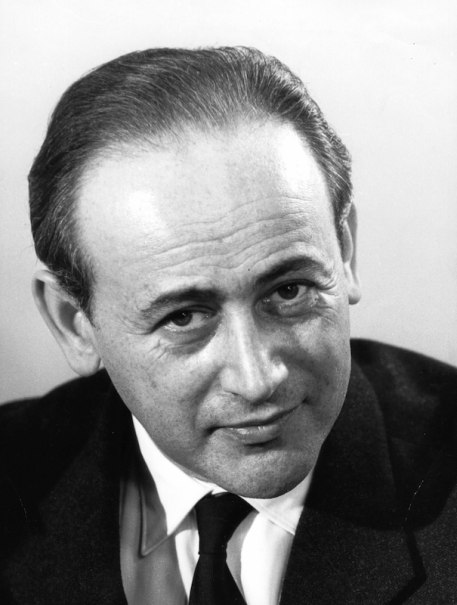
Paul Celan: Mit wechselndem Schlüssel

Location:
Literaturhaus Stuttgart, Breitscheidstr. 4, 70174 Stuttgart

Classics of Literary History
A Conversation with Ulrike Draesner and John von Düffel
Moderator: Anne-Dore Krohn; Prologue and Epilogue: Timo Brunke
In his poems, Paul Celan (1920–1970) repeatedly addresses experiences of violence, finding a poetic form for the horror of the Shoah—a prime example of this is the famous “Death Fugue.” At the same time, Adorno wrote his famous dictum in 1949: “To write a poem after Auschwitz is barbaric.” Although Celan lived in France, he refused to abandon the German language. For this, he was recognized, misunderstood, and attacked. He spent his entire life searching for language: particularly striking is his speech “The Meridian,” which he delivered on the occasion of the 1960 Büchner Prize ceremony. It can be read as a key text in poetics, whose title traces back to a sentence by Nelly Sachs in a letter to Celan: “Between Paris and Stockholm runs the meridian of pain.” He always conceives of his poems as messages in a bottle—the recipients are uncertain.

A series of events presented by LpZ Stuttgart and DerDiwan Audiobook Publishing. Supported by the Ministry of Culture, Youth, and Sports of Baden-Württemberg

Paul Celan: Mit wechselndem Schlüssel

Location:
Literaturhaus Stuttgart, Breitscheidstr. 4, 70174 Stuttgart

Classics of Literary History
A Conversation with Ulrike Draesner and John von Düffel
Moderator: Anne-Dore Krohn; Prologue and Epilogue: Timo Brunke
In his poems, Paul Celan (1920–1970) repeatedly addresses experiences of violence, finding a poetic form for the horror of the Shoah—a prime example of this is the famous “Death Fugue.” At the same time, Adorno wrote his famous dictum in 1949: “To write a poem after Auschwitz is barbaric.” Although Celan lived in France, he refused to abandon the German language. For this, he was recognized, misunderstood, and attacked. He spent his entire life searching for language: particularly striking is his speech “The Meridian,” which he delivered on the occasion of the 1960 Büchner Prize ceremony. It can be read as a key text in poetics, whose title traces back to a sentence by Nelly Sachs in a letter to Celan: “Between Paris and Stockholm runs the meridian of pain.” He always conceives of his poems as messages in a bottle—the recipients are uncertain.

A series of events presented by LpZ Stuttgart and DerDiwan Audiobook Publishing. Supported by the Ministry of Culture, Youth, and Sports of Baden-Württemberg

Location & Contact

Literaturhaus Stuttgart
Breitscheidstr. 4
70174 Stuttgart

Organizer: Literaturhaus Stuttgart

Plan your trip

Verkehrs- und Tarifverbund Stuttgart GmbH
VVS timetable information

Deutsche Bahn AG
DB timetable information

Google Maps
Google Maps Route

Please accept the use of all cookies to view the content of this site.

Accept all cookies