
Unerwünscht. Die westdeutsche Demokratie und die Verfolgten des NS-Regimes
- Location:
- Württembergische Landesbibliothek - Bibliothek für Zeitgeschichte, Konrad-Adenauer-Straße 8, 70173 Stuttgart
- Date
- March 18, 2026, 6:00 PM
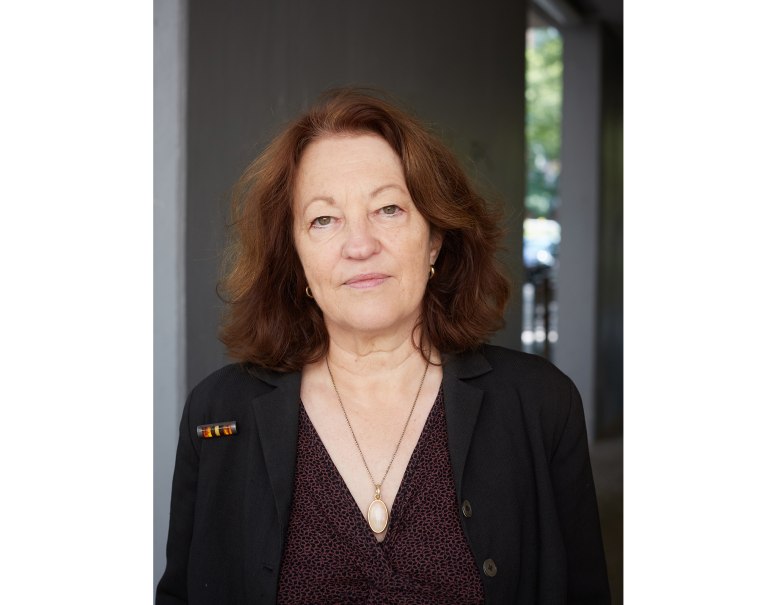
Book presentation with Prof. Dr. Stefanie Schüler-Springorum (TU Berlin)
The renowned historian Stefanie Schüler-Springorum is the first to present West German post-war society from the perspective of the people who were persecuted under National Socialism. In doing so, she tells a story that has been largely ignored until now. She describes the experiences of surviving Jews and Sinti and Roma, former forced laborers and homosexuals in the western part of Germany in the first post-war decades.
After 1945, there was no less anti-Semitism and racism, no less hatred of homosexuals than during the Nazi era, but probably even more. There was talk of "marauding" liberated Eastern Europeans when it came to former forced laborers, or of "haggling" Jewish DPs on the Munich black market. Sinti and Roma had been fully registered during National Socialism. The 30,000-name register continued to be used for police measures in the Federal Republic. Homosexuals also continued to be prosecuted, until 1969 on the basis of § 175 in the 1935 version.
The common image of the successful democratization of the Federal Republic is torn apart by these stories. The experiences of those formerly persecuted show that the hatred and resentment against them did not simply disappear; they were deeply rooted in people's minds and in some cases still are today. The reasons and functions of these attitudes may be very different, but they have one thing in common: the desire of the majority society that the people concerned should not be there.
Stefanie Schüler-Springorum is a historian and has been Director of the Center for Research on Anti-Semitism at TU Berlin since 2011 and Co-Director of the Selma Stern Center for Jewish Studies Berlin-Brandenburg since 2012. She previously worked at the Topography of Terror Foundation and headed the Institute for the History of German Jews in Hamburg from 2001 to 2011. Her central themes are Jewish, German and Spanish history in the 19th and 20th centuries.
Participation on site in the Württemberg State Library, hall (Konrad-Adenauer-Str. 10, 70173 Stuttgart) or online via the access link: https://bitbw.webex.com/meet/wlb
A joint event of the Stuttgart City Archive and the Württemberg State Library