

80 Jahre nach dem Nürnberger Prozess: Das Völkerstrafrecht unter Druck
- Location:
- Oberlandesgericht Stuttgart, Olgastraße 2, 70182 Stuttgart
- Date
- November 19, 2026, 6:00 PM
The lecture by Prof. Dr. Christoph Safferling at the Stuttgart Higher Regional Court explores the legacy of Nuremberg, its significance for international law today, and points to ways out of the current crisis. It is part of the event series “Reflections on the Rule of Law.”
Eighty years ago, the first-ever international criminal trial took place in Nuremberg. The conviction of the principal Nazi war criminals is still regarded today as a milestone in the development of international law.
The establishment of the International Criminal Court in The Hague in 1998 represents an attempt to carry forward the lessons of Nuremberg within a permanent institution.
Today, the International Criminal Court is grappling with internal structural difficulties, but is also facing massive attacks from outside.
Even two states that called for and shaped the development of international criminal law after 1945 are now vigorously opposing the successor institution to the Nuremberg Tribunal.
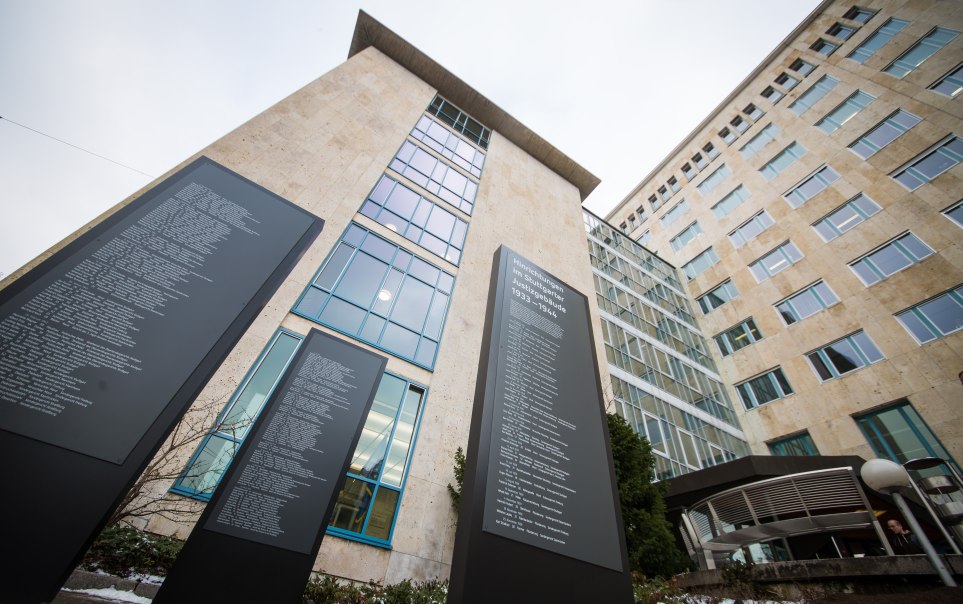
The exhibition “Nazi Justice in Stuttgart” at the Stuttgart Regional Court documents the Nazi criminal justice system and the radicalization of judicial practice from 1933 to 1945. Among other things, the exhibition highlights the biographies of the judges and prosecutors of the Special Court and the criminal divisions of the Higher Regional Court who participated in imposing death sentences. Most of them resumed their careers in the judicial system beginning in 1950.
The lecture series aims to address and explore the issues raised by the exhibition through in-depth lectures and similar events. The focus will not only be on specific historical aspects and how the judiciary has dealt with its Nazi past, but will also turn to current developments and challenges facing the rule of law.
Prof. Dr. Christoph Safferling holds the Chair of Criminal Law, Criminal Procedure, International Criminal Law, and International Law at Friedrich-Alexander University Erlangen-Nuremberg and serves as Director of the International Academy of the Nuremberg Principles.